

To stop drains blocking: keep fat, oil, food, hair and wet wipes out of them, fit plughole strainers, flush kitchen wastes with hot water weekly, clear outside gullies each autumn, and check chambers after storms. Follow the month-by-month plan below and most homes will never need an emergency call. Drains that block anyway usually have a fault that needs finding, not more cleaning.
Almost every blocked drain we clear was preventable. Not with special products or expensive gadgets, but with a handful of habits and a few ten-minute jobs spread through the year. This guide sets those jobs out as a simple 12-month plan, tuned to what Cornwall and Devon weather actually throws at your drains: heavy autumn leaf fall, hard winter storms, and long summer lets and holiday shut-downs. Follow it and you keep your money; ignore it and sooner or later you pay someone like us to put it right.
On this page
The daily habits that prevent 90% of blockages
Blockages are made in kitchens and bathrooms, one plughole at a time. The material we pull out of domestic drains is nearly always the same short list: congealed fat, food waste, hair, soap scum and wet wipes. Change what goes down and you change what blocks up.
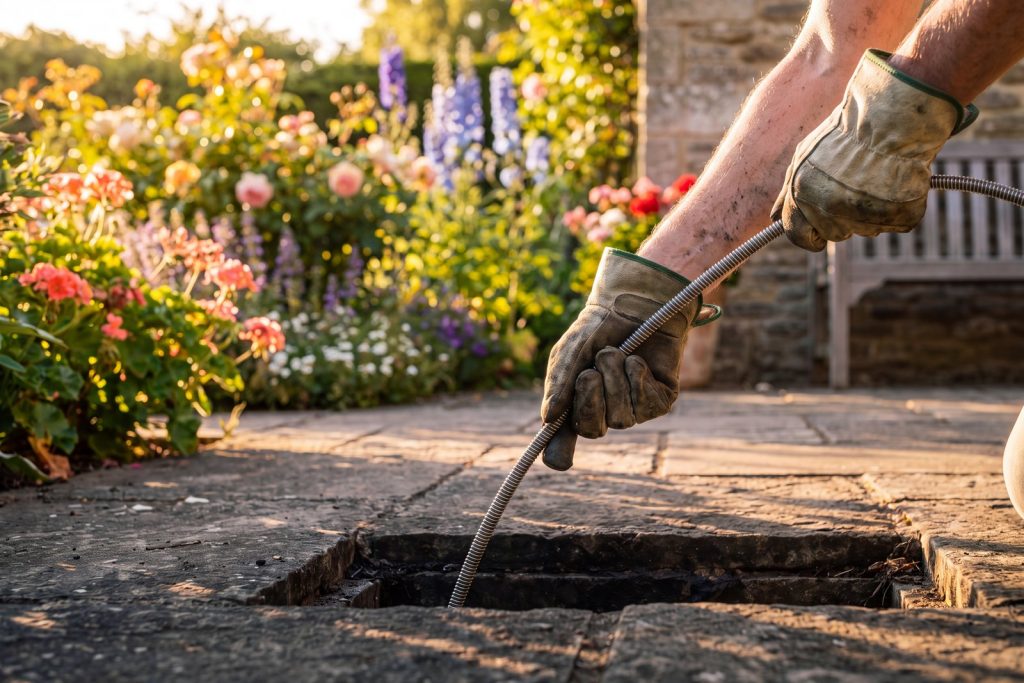
- Never pour fat or oil down the sink. It cools, sets and coats the pipe. Wipe pans with kitchen roll and bin it, or pour cooled oil into a container for the bin.
- Fit strainers on every plughole. A £2 mesh strainer in the kitchen sink, bath and shower catches food and hair before they enter the pipe. Empty it into the bin, not down the drain.
- Flush only the three Ps. Pee, poo and paper. Wet wipes, including the ones labelled flushable, do not break down and are the single biggest cause of the blockages we attend. Cotton buds, sanitary products and kitchen roll all belong in the bin too.
- Scrape plates before washing up. Rice, pasta and coffee grounds swell and settle in the pipe. A dishwasher does not make them disappear either; it just delivers them at higher temperature.
- Run hot water after washing up. A minute of hot tap water once a week helps move soft grease along before it sets in the trap and the first few metres of pipe.
That is the whole secret. Everything else in this plan is about the outside drains, which most people never look at until they overflow.
The 12-month drain maintenance plan
Ten minutes a month, with a couple of slightly bigger jobs in spring and autumn. Adjust the months to suit, but keep the order: the autumn jobs before the leaves, the winter checks before the storms.
| Month | Job | Time |
|---|---|---|
| January | After winter storms, lift the nearest inspection chamber lid and check water is flowing, not standing. Check gullies are draining freely. | 10 min |
| February | Flush every plughole in the house with hot water. Clean plughole strainers and bathroom traps of hair and soap build-up. | 15 min |
| March | Walk the outside of the property. Look for damp patches, sunken paving or unusually green grass along drain runs, all early signs of a leak. | 10 min |
| April | Spring clean the gullies: lift the grates, scoop out silt and debris, rinse through with a bucket of water. | 20 min |
| May | Check gutters and downpipes are clear and discharging properly into the gully, not over it. | 15 min |
| June | If any drain has been slow or smelly this year, book a professional clean now, before holiday season fills the house. | Phone call |
| July | Holiday let or second home? Brief guests or cleaners on the no-wipes rule and check drains between changeovers. | 10 min |
| August | Repeat the hot water flush of all plughole wastes. Check the washing machine and dishwasher standpipes drain freely. | 15 min |
| September | Pre-autumn check: clear gullies and grates again, trim plants growing over drain covers, note any cover that is cracked or sitting proud. | 20 min |
| October | Leaf fall: clear leaves from gullies, grates and gutters. Repeat after any windy week through to December. | 15 min |
| November | Before the first hard storms, lift the chamber lid again and confirm free flow. Report shared or public drain concerns to South West Water. | 10 min |
| December | Christmas is peak fat-down-the-sink season. Keep a fat container by the hob, and remind the household about the three Ps before guests arrive. | 5 min |
Season by season: what matters and why
Autumn: leaves and the first storms
Autumn is when outside drains earn their keep. Leaves and silt wash into gullies with the first heavy rain, and a grate that is half covered in October is fully blocked by November. In this part of the world the storms arrive with real volume behind them, and a gully that cannot swallow roof water sends it towards the house instead. Clearing grates takes minutes and prevents the classic autumn callout: a flooded path or a garage taking water under the door.
Winter: storms and standing water
Winter is checking season. After each big blow, a quick look at gullies and the nearest chamber tells you whether everything is still moving. Standing water in a chamber that is normally clear means a blockage is forming downstream; catching it then, in normal hours, is far cheaper than meeting it as a Boxing Day emergency.
Spring: the inspection walk
Spring is for looking at the ground. Winter water finds every weakness, so a damp patch beside a wall, a line of lush grass, or paving that has sunk since last year are all worth noting. They are the early signatures of a leaking or damaged run, and spring is the comfortable time to investigate them.
Summer: guests and shut-downs
Summer in Cornwall and Devon means full houses. Holiday lets, second homes and visiting family all multiply what goes down the drains, usually by people who do not know the house. A laminated note about wipes in the bathroom of a holiday let is not over the top; it is cheaper than the changeover-day blockage that costs you a booking.
When a professional clean is worth it
Good habits stop new material building up, but they cannot remove what is already lining the pipe. Years of grease, scale and soap deposit narrow the bore, and a narrowed pipe blocks more easily no matter how careful you are. The signs that build-up has got ahead of your habits: more than one fixture draining slowly, gurgling from plugholes when other fixtures are used, and smells that return within days of cleaning the traps.
A planned professional clean, usually with high pressure water jetting, restores the full bore of the pipe and resets the clock. For most homes with a history of trouble, once a year is plenty. Our drain cleaning and maintenance service does exactly this on a planned basis, in normal hours, at a fraction of what the eventual emergency costs.
One honest caveat: if a drain keeps blocking in the same place despite good habits and cleaning, stop cleaning it and find out why. A repeat blockage nearly always has a physical cause, such as a bellied section, roots or a damaged joint, and the fix is a survey and a repair, not a fourth clean. Our guide on why drains keep blocking explains how to tell the difference.
Commercial premises: a different standard
If you run a kitchen, a pub, a care home, holiday accommodation or any premises where drains failing means trading stops, prevention is not a nice-to-have. Fat from a commercial kitchen builds far faster than domestic waste, and a blockage during service is lost revenue and an environmental health question rolled into one. The answer is a planned maintenance cycle: scheduled jetting and checks at a frequency matched to your usage, agreed in advance, done outside your busy hours. That is a core part of our commercial drainage work across Plymouth, south east Cornwall and south and west Devon, and it exists precisely so you never meet your drains as an emergency.
Frequently asked questions
How do I stop my drains from blocking?
Most blockages come from what goes down the plughole: fat, oil, food waste, hair and wet wipes. Fit strainers on plugholes, wipe grease into the bin before washing up, only flush the three Ps (pee, poo, paper), and clear leaves from outside gullies each autumn. Add a hot water flush of kitchen wastes weekly and check your gullies after storms, and you will prevent the vast majority of blockages.
How often should drains be cleaned?
For most homes, good habits plus a seasonal check of gullies is enough, with a professional clean only if drains start running slowly. Homes with a history of blockages, lots of trees nearby or older pipework benefit from a planned professional clean roughly once a year. Commercial kitchens and busy premises usually need cleaning on a more frequent planned cycle.
Do drain cleaning chemicals prevent blockages?
Not really. Caustic drain chemicals dissolve some organic matter near the plughole but rarely reach a deeper build-up, and repeated use can damage older pipework and harm the environment. Prevention through strainers, binning fat and regular hot water flushes works better, and a mechanical or high pressure water clean deals with build-up that habits cannot.
Why does my drain keep blocking even though I am careful?
A drain that blocks repeatedly despite good habits usually has a physical cause: a bellied or damaged section holding waste, intruding tree roots, heavy scale, or a poorly laid pipe. No amount of prevention fixes a defect. A CCTV drain survey will show what is happening inside the pipe so the cause can be repaired once.
Put your drains on a plan, not on luck
We offer planned drain cleaning and maintenance for homes, holiday lets and commercial premises across Plymouth, south east Cornwall and south and west Devon. One scheduled visit a year beats one emergency every winter.
Call DCI Drainage on 07418 000 420 Fast, free quotes · Local, independent, not a franchise


